Why Your Walk-In Cooler Isn't Staying Cold (And What Causes It)
Wichita Fridge Repair
When your walk-in stops holding temperature, the clock starts fast
If your walk-in cooler is warming up, this is not just an inconvenience. It can put food safety, daily operations, and thousands of dollars in inventory at risk. The FDA Food Code requires cold-held time/temperature control for safety foods to stay at 41°F or below, so even a small temperature climb can become a serious business problem if it lasts too long.
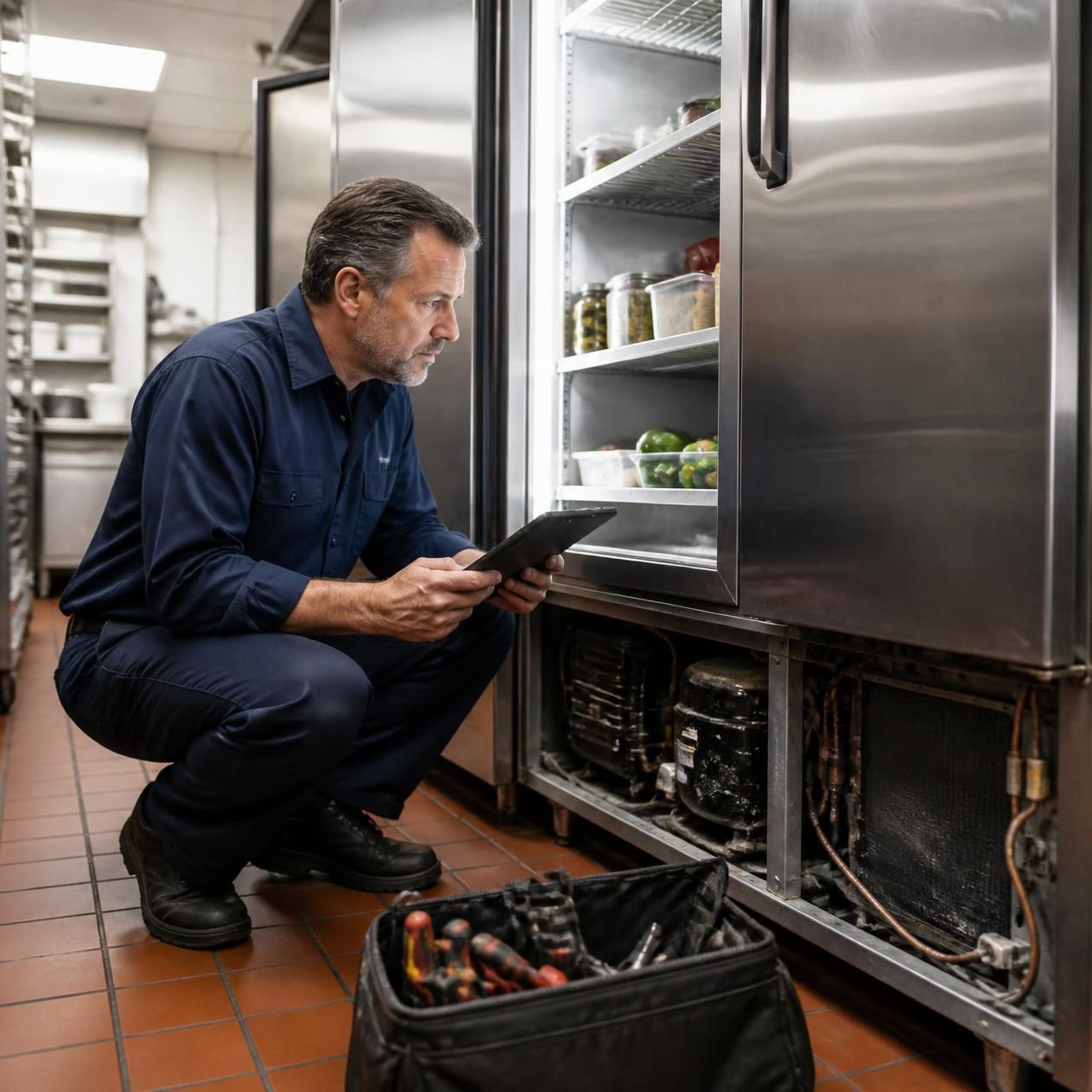
For restaurants, bars, grocery stores, schools, hospitals, churches, floral shops, liquor stores, and commercial kitchens in Wichita, Derby, Andover, Park City, and Maize, speed matters. If you're searching for walk-in cooler repair, the first goal is to protect product and figure out whether the problem is something simple or a sign you need professional commercial refrigeration repair. Call Wichita Fridge Repair at 316-844-7845 for a diagnostics.
What to check first before you call
Start with the basics. Make sure the unit has power, the breaker hasn't tripped, and the control or thermostat wasn't bumped. Then check whether the door is fully closing and sealing. A worn gasket, broken latch, or box propped near the threshold can pull warm, wet air into the cooler and make the system work much harder. That same moisture often turns into frost on the evaporator coil later.
Next, look at airflow. If boxes are stacked tight against the evaporator, supply air can't circulate. If the cooler is packed too full, airflow gets blocked. If it's nearly empty, it may lose temperature faster because there's less cold product mass helping stabilize the space. Both overloading and under loading can show up as the same symptom — a rising temperature — even though the fixes are opposite.
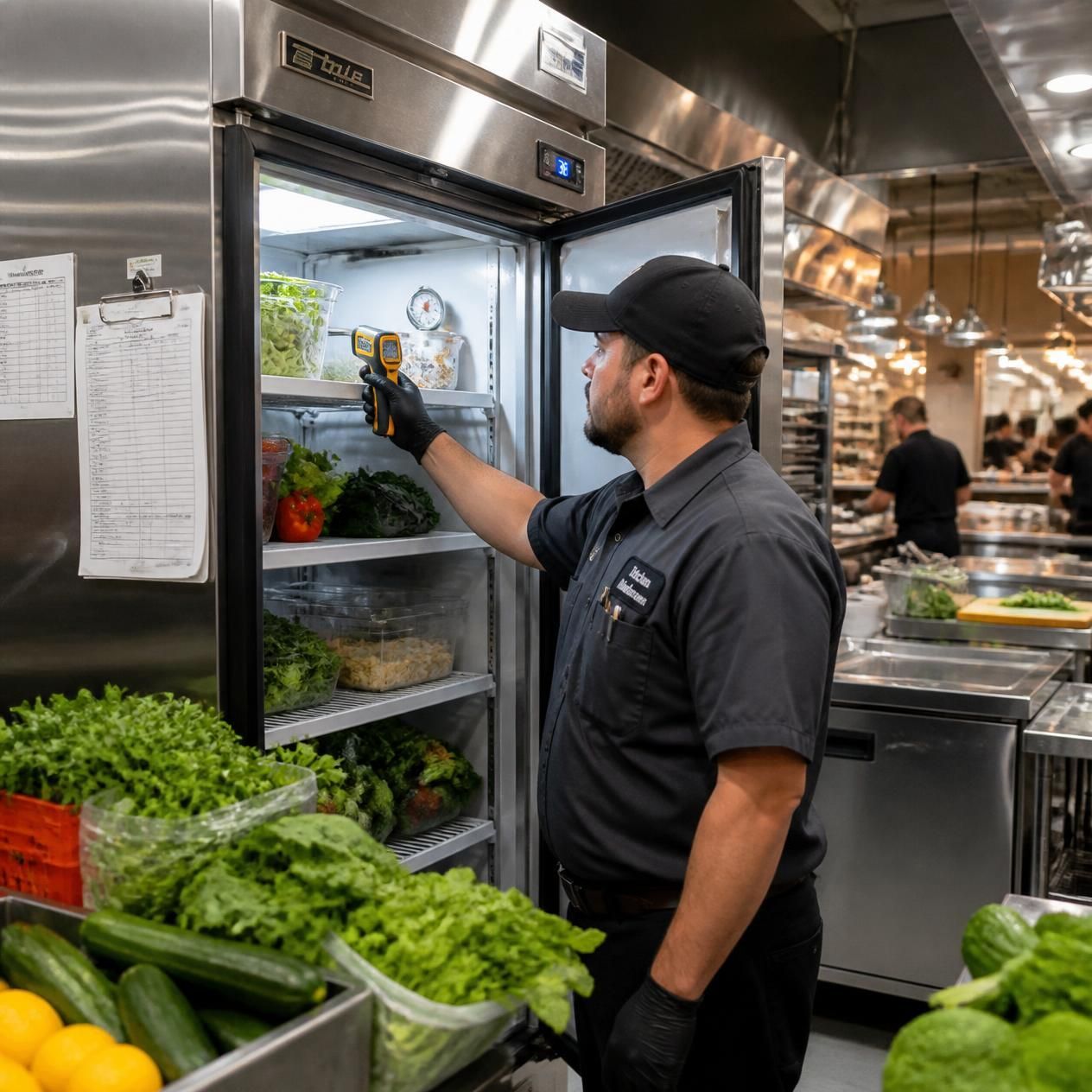
One more important point: don't panic over every short air-temperature spike. During deliveries, lunch rushes, and constant door openings, box air temperature can rise faster than the actual product temperature. That doesn't mean the issue is harmless, but it does mean you should verify what's really happening before assuming all inventory is lost.
The most common reasons a walk-in cooler is not staying cold
Dirty condenser coils
The condenser coil's job is to dump heat. When it gets packed with dust, grease, lint, or kitchen debris, the system can't get rid of heat efficiently. The result is longer run times, weaker cooling, and higher stress on the compressor. Routine condenser coil cleaning is one of the simplest ways to prevent this, and a dirty coil is one of the most common causes of a walk-in cooler not cooling well in busy kitchen environments.
Frozen evaporator coils
If the evaporator coil inside the box is covered in ice, airflow drops hard. Once airflow drops, box temperature rises even if parts of the system are still running. Common triggers include poor door seals, doors left open, blocked airflow, and failed defrost components. If the coil is completely encased in ice, don't chip at it with sharp tools — that can damage the coil and turn a repair into a much bigger bill.
Defrost problems
Many walk-ins rely on a defrost cycle to keep the evaporator from icing over. If the defrost heater, timer, termination control, or related component fails, frost can build until cooling performance drops. Worth noting: a brief temperature rise on the display can sometimes happen during a normal defrost cycle, so one warm reading isn't always a failed system.
Fan motor or control failures
A failed evaporator fan means cold air isn't being pushed through the box. A failed condenser fan can keep the unit from rejecting heat outside. Control-board problems, sensor issues, or a bad thermostat can also make the cooler run at the wrong time or stop too early. These faults often look like "the cooler is running, but not cooling."
Low refrigerant or a leak
If the system is low on refrigerant, cooling capacity drops. You may see ice in the wrong place, poor pull-down, long run times, or temperature swings that never fully recover. This isn't a DIY job — the EPA restricts refrigerant purchase to Section 608 certified technicians for stationary refrigeration systems, and technicians must follow required recovery and recycling practices.
Call
Wichita Fridge Repair
for a check up. 316-844-7845
Need a diagnosis today?
If any of this sounds like what you're seeing right now, don't wait for it to get worse. Call Wichita Fridge Repair at 316-844-7845 for same-day diagnosis on walk-in cooler and walk-in freezer repair in Wichita.
When to call for professional walk-in cooler repair
Call for service quickly if the box temperature keeps climbing, the evaporator is heavily iced, the compressor is short-cycling, the unit runs nonstop without pulling down, or you suspect a refrigerant leak. Also call if you hear hissing, clicking, metal-on-metal noise, or fan motors that aren't running.
From a food-safety standpoint, don't wait all day hoping the problem fixes itself. FoodSafety.gov notes that refrigerated perishables should be discarded after 4 hours without power, and many refrigerated perishables exposed to 40°F or above for more than 2 hours should also be discarded. If this is a stocked commercial cooler, lost time becomes lost product fast.
Repair costs vary widely depending on the cause — a gasket or fan motor repair is a very different job than a sealed-system refrigerant repair. Wichita Fridge Repair can give you an accurate estimate after diagnosis rather than guessing over the phone. Call Now 316-844-7845
Simple steps that help prevent the next breakdown
A good maintenance routine prevents many emergency calls: keep the door closed as much as possible, inspect gaskets for tears, run the "dollar bill test" on door seals, keep product away from the evaporator air path, and keep the area around the condensing unit clean.
Frequency What to check
Daily Box temperature, doors closing fully, clear airflow paths
Weekly Gaskets, hinges, latches; water on floor or ice buildup
Monthly Condenser area for dust/grease, fan operation, drain clear
Quarterly/seasonal Schedule professional preventative maintenance before peak summer stress
Repair or replace
In many cases, repair makes sense for a fan motor, sensor, control, gasket, drain issue, or dirty coil. Replacement becomes worth discussing when the box has repeated sealed-system problems, major physical damage, chronic inefficiency, or an aging compressor with a growing repair history. The right answer depends on repair cost, downtime risk, and how critical the cooler is to your business.
Call Wichita Fridge Repair before inventory becomes the next problem
If your walk-in is warming up and basic checks didn't solve it, don't gamble with food safety or product loss. Wichita Fridge Repair serves Wichita, Derby, Andover, Park City, and Maize with commercial refrigeration service, including walk-in cooler repair, walk-in freezer repair, emergency refrigeration repair, and preventative maintenance. Call 316-844-7845 now to get the unit diagnosed before a cooling issue becomes a spoilage issue.
FAQ
How cold should a walk-in cooler be?
A walk-in cooler is usually set to the mid-30s so products stay at 41°F or below, the FDA cold-holding standard for time/temperature control for safety foods.
Why is my walk-in cooler running but not cooling?
Common causes include dirty condenser coils, frozen evaporator coils, failed fan motors, bad controls, blocked airflow, or low refrigerant.
Can a dirty condenser coil make my walk-in stop cooling?
Yes. When the condenser can't reject heat well, the system loses cooling performance and may run longer without reaching set point.
How long will a walk-in cooler stay cold without power?
As a general federal food-safety benchmark, refrigerated food stays safe for about 4 hours during a power outage if doors stay closed; perishable foods should be discarded after that point.
Should I turn the cooler off if the evaporator is a solid block of ice?
Don't keep forcing a fully iced-up system, and don't chip the ice with sharp tools. Limit door openings and call for service so it can be diagnosed and defrosted properly.
Can I add refrigerant myself?
No. Refrigerant purchase and service for stationary refrigeration systems is restricted to appropriately certified technicians under EPA rules.
When is replacement better than repair?
Replacement is worth discussing when repairs are frequent, the compressor or sealed system is a repeated issue, or the equipment is creating ongoing downtime. For control, fan, gasket, and coil-related issues, repair is usually still the better first move.
Protect Your Inventory Before a Small Problem Gets Worse
Refrigeration problems tend to get more expensive the longer they continue. Early service protects your inventory, reduces downtime, and can prevent additional component damage.
Contact Wichita Fridge Repair 316-844-7845 for commercial refrigerator repair in Wichita, Derby, Andover, Park City, or Maize. Describe the equipment, current temperature, warning signs, and any error codes so the problem can be assessed as quickly as possible.