10 Warning Signs Your Commercial Refrigerator Needs Immediate Repair
Wichita Fridge Repair
10 Warning Signs Your Commercial Refrigerator Needs Immediate Repair
A commercial refrigerator rarely fails without warning. In most cases, it shows small signs of trouble well before a complete breakdown occurs. For a restaurant, grocery store, bar, hotel, school, or commercial kitchen, ignoring those signs can lead to spoiled inventory, food safety violations, higher energy bills, and unplanned downtime.
Knowing what to watch for lets you act before a minor fault turns into an expensive emergency. Below are 10 signs it's time to schedule commercial refrigerator repair in Wichita, KS, plus what to do while you wait for help and how to tell whether a unit is worth repairing or replacing.
1. The Refrigerator Is Not Staying Cold
Temperature drift is one of the clearest signs of a refrigeration problem. Drinks may not feel as cold, food may spoil sooner than expected, or different areas of the cabinet may hold noticeably different temperatures.
Dirty condenser coils
What it affects: Heat rejection, overall cooling capacity
Blocked air vents
What it affects: Internal air circulation
Worn door gasket
What it affects: Cold air retention
Faulty thermostat or sensor
What it affects: Temperature accuracy
Evaporator fan problem
What it affects: Air distribution inside cabinet
Refrigerant leak
What it affects: Overall cooling capacity
Failing compressor
What it affects: System's ability to cool at all
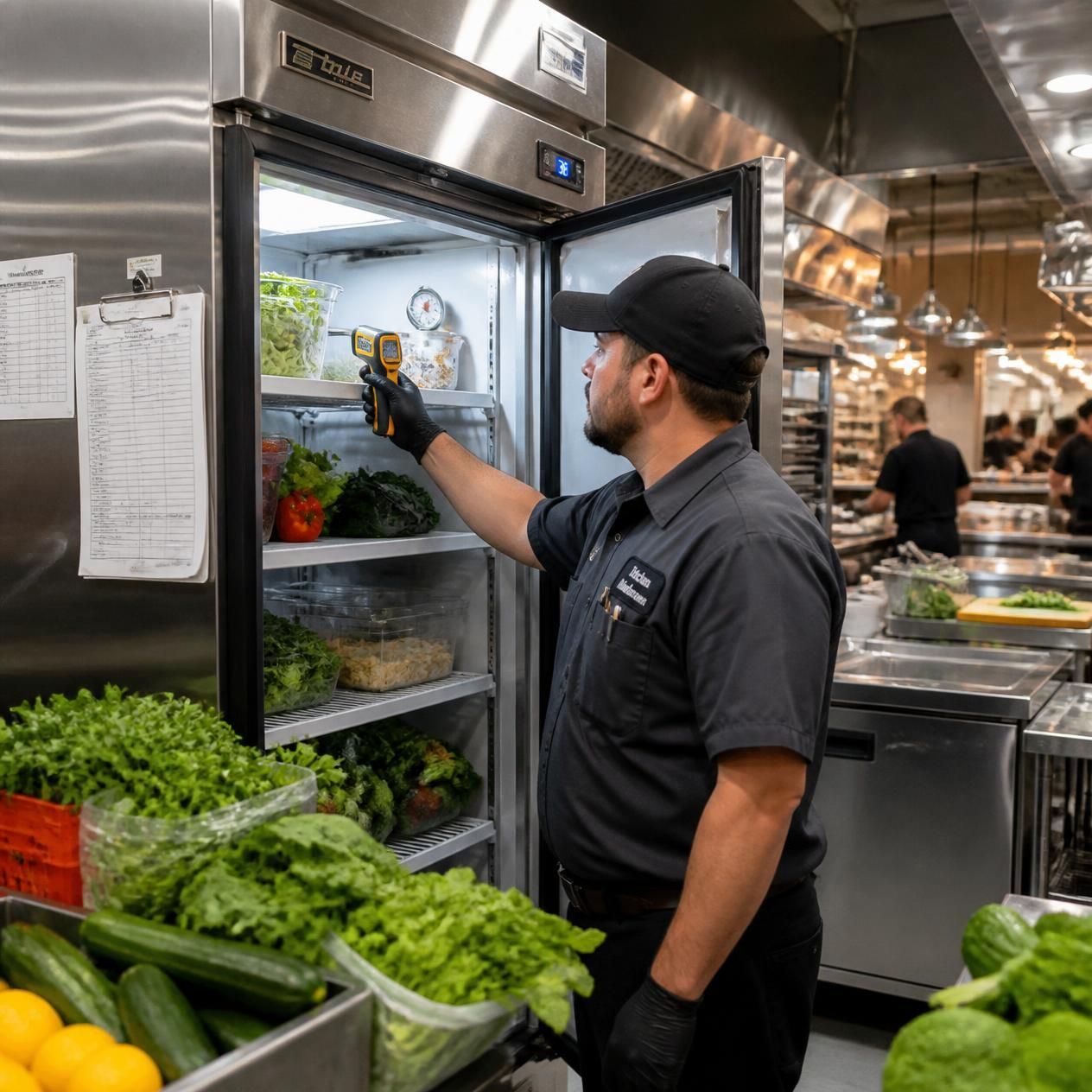
Check the unit with an accurate appliance thermometer rather than relying on its built-in display. Food businesses need to take temperature control seriously... the FDA Food Code sets 41°F or below as the cold-holding standard for many foods that require time and temperature control for safety.
If the temperature keeps rising, move perishable products to another working unit and call Wichita Fridge Repair 316-844-7845 right away.
2. Frost or Ice Is Building Up
A thin layer of frost isn't unusual, but heavy ice around the evaporator coil, walls, ceiling, or food packages restricts airflow and reduces cooling performance.
Common causes include a failed defrost heater or timer, a damaged door gasket, doors left open too often, a blocked drain line, a failing evaporator fan, an airflow restriction, or a broader refrigeration system fault.
Don't use a knife or sharp tool to chip away ice... it can puncture a refrigerant line or damage the coil. A technician should identify why the ice is forming before it's cleared.
3. Water Is Pooling Around the Unit
Water on the floor can point to a blocked defrost drain, damaged drain pan, frozen evaporator coil, loose water connection, or excessive condensation.
Even a small leak deserves attention. Standing water damages flooring, encourages mold growth, and creates a slip hazard for staff and customers. Clean up the water, keep people clear of the area, and check whether the unit is still holding temperature. Recurring leaks generally need a professional diagnosis rather than a repeat mop-up.
4. You Hear Unusual Noises
Commercial refrigerators make some noise during normal operation, but a new clicking, grinding, squealing, buzzing, or rattling sound usually points to a specific failing component.
Clicking
Likely source: Start relay, capacitor, compressor, or electrical fault
Squealing
Likely source: Worn fan motor or bearing
Grinding
Likely source: Fan blade obstruction or damaged motor
Buzzing
Likely source: Electrical or compressor issue
Rattling
Likely source: Loose panel, tubing, mount, or fan blade
Turn the unit off if you smell burning, see sparks, or hear a severe electrical sound, and don't remove electrical panels yourself.
5. The Refrigerator Runs Constantly
A commercial refrigerator cycles on and off to hold its set temperature. If it's running almost continuously, it's struggling to remove heat, usually from dirty condenser coils, poor ventilation, damaged door seals, a hot kitchen environment, low refrigerant, or a failing compressor.
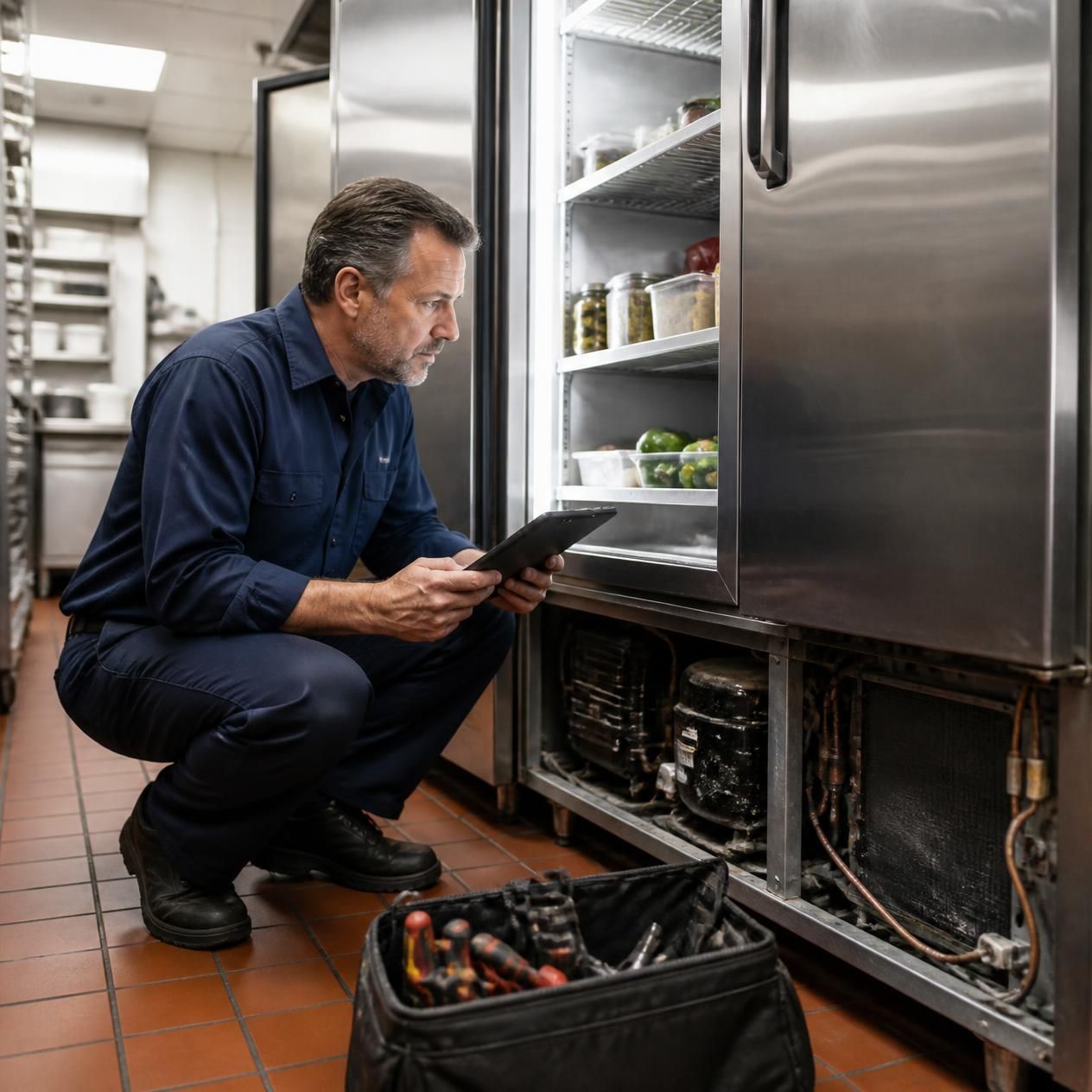
Grease is a particular problem in restaurant kitchens. Airborne grease from grills and fryers coats condenser coils, traps dust, and restricts airflow, forcing the system to work harder and shortening the life of key components. Call for a diagnostics today Wichita Fridge Repair 316-844-7845
6. Your Energy Use Suddenly Increases
A failing refrigeration system often draws more electricity before it stops cooling altogether. A sudden spike may connect to dirty coils, worn door gaskets, failing fan motors, incorrect temperature controls, poor airflow, or a compressor running for extended periods.
Compare recent energy use with a similar period from previous months. If nothing else about your operation has changed, a jump in usage is worth having checked.
7. The Door Does Not Seal Properly
A torn, loose, hardened, or dirty gasket lets warm air and moisture into the cabinet, causing temperature fluctuations, condensation, frost, and longer compressor cycles.
Test the seal by closing the door on a piece of paper. If the paper slides out with little resistance, that section of gasket needs inspection. Gaskets can often be cleaned or replaced without replacing the whole unit, catching this early reduces strain on the entire cooling system.
8. The Circuit Breaker Keeps Tripping
A commercial refrigerator that repeatedly trips a breaker may have an electrical short, an overloaded circuit, damaged wiring, a failing compressor, a defective motor, or a faulty start component.
Don't keep resetting the breaker... doing so can create a fire risk or cause further equipment damage. Switch the unit off and arrange an inspection. Electrical and refrigeration faults shouldn't be diagnosed by untrained staff.
If your unit is tripping breakers, losing temperature, or leaking near outlets, that's an emergency... call/contact Wichita Fridge Repair at 316-844-7845 before it becomes a bigger problem.
9. You Notice Bad Odors
An unpleasant smell can come from spoiled food, dirty drain lines, stagnant water, mold, or hidden spills. A hot or burnt odor may point to an overheating motor or electrical component.
Remove spoiled products and clean accessible food-contact surfaces according to the manufacturer's instructions. If the odor persists after cleaning, or seems to come from the machinery itself, schedule a service visit.
Never rely on smell or appearance alone to judge whether temperature-sensitive food is safe. FDA guidance recommends using appliance and food thermometers to evaluate food after any loss of refrigeration.
10. Error Codes Keep Appearing
Modern commercial refrigerators use digital controllers to report sensor faults, high temperatures, fan failures, or defrost problems.
Record the full error code along with when it appeared, the displayed temperature, any unusual noise, whether doors were recently left open, and whether the unit lost power. Don't clear recurring codes without investigating the cause... that information helps a technician diagnose the problem faster.
What to Do While Waiting for Repair
- Confirm the temperature with a separate thermometer.
- Keep doors closed as much as possible.
- Move perishable products to working refrigeration.
- Record temperatures and when the problem started.
- Check for blocked exterior vents without opening service panels.
- Clean up water and rope off any slip hazard.
- Contact a technician for commercial refrigerator repair near Wichita.
Avoid adding refrigerant, bypassing safety controls, removing electrical covers, or chipping ice from the evaporator coil yourself.
Choosing a Qualified Technician
Anyone who handles refrigerant as part of a repair is legally required to hold an EPA Section 608 certification under the Clean Air Act... this is a federal requirement, not a marketing claim, and it's worth confirming before letting anyone open up your system. Beyond that, ask how quickly they can respond, whether they carry common parts for your equipment type, and whether they service your specific brand of unit.
When Should You Repair or Replace the Unit?
Repair usually makes sense when the refrigerator is in otherwise good condition and the problem involves a replaceable part, a gasket, fan motor, sensor, thermostat, or start component.
Replacement deserves more consideration when:
- The cabinet has serious rust or structural damage
- Breakdowns are becoming frequent
- Replacement parts are hard to obtain
- The unit no longer meets your business's capacity needs
- Energy costs stay unusually high
- A major repair would cost a large share of a replacement unit
A technician can walk you through the equipment's condition, likely repair cost, and expected remaining lifespan... but the decision should also weigh downtime and inventory risk, not just the repair bill.
Commercial Refrigerator Repair in Wichita and Nearby Areas
Hot Kansas summers and busy commercial kitchens place heavy demands on refrigeration equipment. Regular inspection, coil cleaning, gasket care, and temperature monitoring help catch problems before they become emergencies, whether you're running a kitchen in Wichita, a school cafeteria in Andover, a grocery store in Derby, a hotel in Maize, or a restaurant in Park City.
Wichita Fridge Repair provides commercial refrigeration repair in Wichita, Derby, Andover, Park City, and Maize, covering commercial refrigerators, freezers, walk-in coolers, walk-in freezers, and ice machines.
When your equipment is warming up, leaking, freezing over, making unusual sounds, or tripping a breaker, schedule an inspection before it turns into a full shutdown.
Frequently Asked Questions
Why is my commercial refrigerator running but not cooling?
Possible causes include dirty condenser coils, blocked airflow, a failed fan, faulty temperature controls, a refrigerant leak, or a compressor problem. Check that the doors close properly and products are not blocking air vents. Monitor food temperatures with a separate, accurate thermometer and move stock to working refrigeration if needed. If cooling does not recover, call 316-844-7845 to discuss the problem and request service.
How often should commercial refrigeration equipment be serviced?
Follow the manufacturer’s maintenance schedule and adjust it to your kitchen’s conditions. Busy kitchens and equipment exposed to grease, dust, or high heat may need more frequent inspections and cleaning. Routine staff checks should continue between professional visits, including checking temperatures, door seals, and airflow.
Can a damaged door seal increase energy costs?
Yes. A damaged or loose door gasket allows warm air into the cabinet, making the refrigeration system work harder to maintain temperature. It can also contribute to condensation, frost buildup, and uneven cooling. Check seals regularly for cracks, gaps, and areas that no longer fit tightly.
Why is ice forming inside my commercial refrigerator?
Ice can form when warm, moist air enters through a damaged door seal or a door left open. Blocked airflow, faulty fans, temperature-control problems, and defrost faults can also cause buildup. Keep vents clear and check that doors close fully. Never chip ice away with sharp tools, and arrange an inspection if it keeps returning.
Is a leaking commercial refrigerator an emergency?
It can be, especially if the refrigerator is warming up, water is near electrical equipment, or the leak creates a slip hazard. Keep people away from the affected area and avoid touching wet electrical components. Check food temperatures and arrange prompt service. Only clean up the water when it is safe to do so.
Should I turn off a refrigerator that keeps tripping its breaker?
Yes—stop using the equipment and do not keep resetting the breaker. Repeated trips can indicate an equipment fault or a problem with the electrical circuit. Have a qualified refrigeration technician inspect the unit and a qualified electrician check the circuit when needed. Move temperature-sensitive stock to working refrigeration.
When should I request emergency commercial refrigeration repair?
Request urgent service when the unit cannot maintain safe food temperatures, has stopped cooling, repeatedly trips its breaker, or develops a burning smell. Move vulnerable stock to working refrigeration and stop using equipment showing electrical warning signs. For refrigeration service enquiries in Wichita and nearby areas, call 316-844-7845 and describe the symptoms and current temperature.
Protect Your Inventory Before a Small Problem Gets Worse
Refrigeration problems tend to get more expensive the longer they continue. Early service protects your inventory, reduces downtime, and can prevent additional component damage.
Contact Wichita Fridge Repair for commercial refrigerator repair in Wichita, Derby, Andover, Park City, or Maize. Describe the equipment, current temperature, warning signs, and any error codes so the problem can be assessed as quickly as possible. 316-844-7845