Commercial Refrigerator Repair vs. Replacement — Which Actually Saves More Money?
Wichita Fridge Repair
Commercial Refrigerator Repair vs. Replacement — Which Actually Saves More Money?
When a commercial refrigerator fails, the clock starts immediately. Restaurants, grocery stores, hotels, schools, and hospitals don't just face a repair bill... they risk spoiled inventory, interrupted service, and food safety violations within hours. The question that follows is rarely simple: approve another repair, or commit to a full replacement?
The answer depends on four factors: the unit's age, the repair estimate, its breakdown history, and the full installed cost of replacement. The cheapest option today isn't always the least expensive option over the next several years.
Need an answer today? Call Wichita Fridge Repair at 316-844-7845 for a same-day diagnostic and a written repair-or-replace recommendation... no guesswork required.
The Quick Repair-or-Replace Decision
Use these guidelines as a starting point. A qualified technician should still diagnose the equipment before you decide.
Usually repair
- Less than halfway through expected lifespan
- Minor electrical, gasket, fan, or control problem
- Repair is below 50% of installed replacement cost
Consider replacement
- Frequent breakdowns during the past 12–24 months
- Major compressor or coil failure on an older unit
- High energy use, poor door seals, and uneven temperatures
- Replacement parts are unavailable
The often-used "50% rule" says replacement deserves serious consideration when a repair costs more than half the price of a comparable new unit. Compare the repair against the complete installed cost, not just the sticker price of the equipment.
Calculate the Real Cost of Each Option
A proper comparison includes more than the current service estimate.
Cost to keep the unit:
Repair cost + expected maintenance + energy use + likely downtime
Cost to replace the unit:
Equipment + delivery + installation + required upgrades + disposal − expected energy savings
For example, a $1,500 repair may look reasonable next to a $7,000 replacement. But that repair becomes far less attractive if the unit has already failed three times, uses an expensive refrigerant, or puts thousands of dollars in inventory at risk.
Replacement can carry hidden costs too. A walk-in system may need electrical changes, new piping, refrigerant recovery, panel work, permits, or temporary cold storage during the swap. Get written estimates covering the same scope before comparing options... an apples-to-oranges quote is the most common way businesses overpay.
Rough replacement cost ranges (equipment only; installation adds significantly, especially for walk-ins):
Reach-in refrigerator/freezer
$3,000–$8,000
Prep table/under counter unit
$2,000–$5,000
Ice machine
$2,500–$7,000
Walk-in cooler/freezer (full system)
$15,000–$40,000+
Ranges vary by size, brand, and installation complexity. Contact Wichita Fridge Repair at 316-844-7845 for a written estimate specific to your equipment.
What Is the Average Commercial Refrigerator Lifespan?
Lifespan depends on equipment quality, daily workload, installation, cleaning, and maintenance. These ranges are planning estimates, not guarantees.
Reach-in refrigerator or freezer
8–12 years
Prep table or under counter unit
7–10 years
Ice machine
7–10 years
Walk-in cooler or freezer panels
15–20+ years
Walk-in compressor and mechanical system
8–15 years
A well-built walk-in freezer can remain useful long after its compressor system needs replacing. In that case, replacing just the mechanical system usually makes more sense than tearing out the whole walk-in.
Luxury built-in refrigerators need a separate calculation. Because replacement often involves cabinetry work and major installation, repairing an older Sub-Zero or similar unit can stay practical longer than repairing a standard commercial refrigerator.
When Repair Makes Sense
Repair is typically the better investment when:
- The unit is relatively young and has been dependable
- This is its first major problem
- The cabinet, doors, insulation, and coils remain in good condition
- The problem involves a thermostat, door gasket, fan motor, relay, drain, or defrost control
- Replacement equipment has a long delivery lead time
- The manufacturer still supports the model and parts are available
A compressor replacement can also be worthwhile on a newer, high-value unit, but before approving one, ask whether a separate issue (a dirty condenser, refrigerant leak, failed fan, or incorrect refrigerant charge) actually caused the compressor to fail. Replacing the compressor without fixing the root cause just delays the next breakdown.
When Replacement Is the Safer Financial Choice
Replacement becomes the stronger option when several warning signs appear together:
- The unit is near or beyond its expected service life
- Temperature problems keep returning after repeated repairs
- The compressor or evaporator coil has suffered major damage
- Door frames, insulation, or the cabinet are visibly deteriorating
- Required parts are obsolete or hard to source
- Energy use has climbed without a clear separate cause
- The equipment can't reliably hold safe temperatures during busy periods
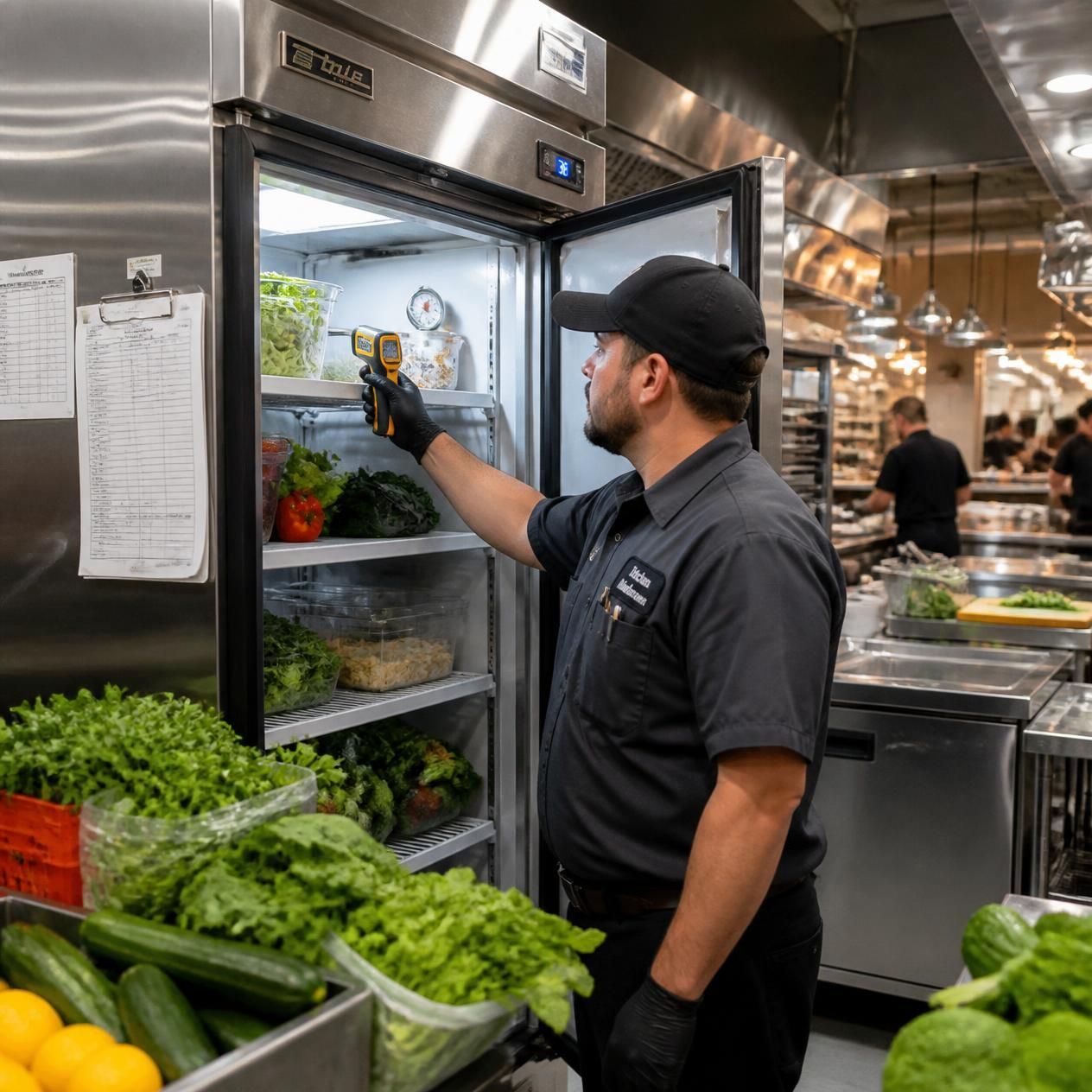
Kansas food establishments must generally keep time-and-temperature-controlled food at 41°F or below, per the Kansas Department of Agriculture's adoption of the FDA Food Code. If a refrigerator can't reliably hold that line, protecting food and customers should take priority over squeezing more life out of the unit.
Wichita Heat and Refrigerant Type Matter More Than You'd Think
Wichita's climate adds real stress to commercial refrigeration equipment. The National Weather Service reports an average of 12.4 days per year at or above 100°F under current climate normals. Dirty outdoor coils, blocked airflow, grease, and cottonwood debris make compressors work even harder during these conditions, which is part of why we see a spike in compressor-related service calls locally every summer.
The refrigerant listed on the equipment nameplate matters too. R-22 is no longer produced or imported in the U.S., though reclaimed supplies can still service existing equipment. R-404A and other high-global-warming-potential HFCs are being phased down, with restrictions now applying to many types of new equipment. None of this forces an operating R-404A unit into immediate replacement, but future refrigerant cost and availability are worth factoring into the decision now, before a leak forces the issue.
Newer systems increasingly use lower-impact refrigerants like R-290. Because R-290 is flammable, it requires equipment-specific handling procedures and trained service personnel... never let refrigerant be topped off without first diagnosing the cause of the loss.
Can a New Refrigerator Lower Energy Costs?
New equipment can meaningfully cut operating costs, especially when replacing a poorly insulated or constantly-running unit. Compare the rated daily energy use of the old and proposed equipment directly, rather than relying on a general "newer is more efficient" claim.
The ENERGY STAR commercial refrigerator database is a useful tool for comparing qualified models, and it's worth asking your utility whether local efficiency incentives are available.
Certain equipment purchases may also qualify for Section 179 treatment or other depreciation benefits. Eligibility, deduction limits, and taxable-income rules vary, confirm the specific benefit with a tax professional rather than treating it as a guaranteed discount.
How Preventive Maintenance Delays Replacement
- Check and record temperatures every day
- Inspect door gaskets monthly
- Keep food and boxes clear of interior airflow vents
- Clean condenser coils per the manufacturer's schedule
- Watch for frost, water leaks, unusual noises, and longer run times
- Schedule professional service before Wichita's hottest months
- Keep repair invoices and maintenance records... they matter for future repair-or-replace decisions
Related reading: [How Often Should Commercial Refrigeration Be Serviced?] and [Walk-In Cooler Repair: Common Problems and Fixes]
Frequently Asked Questions
What is the 50% rule for commercial refrigerator repair?
The 50% rule is a budgeting guideline: if a repair costs around half the price of a fully installed replacement, it is worth comparing both options. It is not an automatic reason to replace the unit. Consider its age, condition, repair history, energy use, and the cost of further downtime.
Is replacing a commercial refrigerator compressor worth it?
It can be, especially if the refrigerator is otherwise in good condition and has several useful years left. Ask the technician what caused the compressor to fail and whether the estimate covers fixing that underlying problem. For older equipment with repeated breakdowns, compare the complete repair quote with an installed replacement.
How much does commercial refrigerator repair cost?
The cost depends on the fault, equipment size, replacement parts, refrigerant, labor, and whether emergency service is needed. A diagnosis is necessary for an accurate quote. Ask for a written estimate showing what is included and whether any additional charges may apply. Call 316-844-7845 to discuss your equipment problem and service availability.
Should an R-404A refrigerator be replaced?
Not simply because it uses R-404A. Existing equipment can still be serviced and repaired. However, if the unit has recurring leaks, frequent breakdowns, or poor efficiency, compare the cost of keeping it running with replacing it. Ask your technician about suitable options for your equipment.
What should I do if my refrigerator is above 41°F?
Check the food temperature with a clean, accurate food thermometer rather than relying only on the refrigerator display. Keep door openings to a minimum, record temperatures and times, and move food to working refrigeration if needed. Foods requiring temperature control generally must stay at 41°F or below. If food is warmer, follow your food-safety procedures and contact your local food-safety authority if you are unsure whether it must be discarded. Arrange service promptly if the refrigerator cannot maintain temperature. If your refrigerator cannot maintain a safe temperature, call 316-844-7845 to request service.
Should a commercial refrigerator be repaired before selling a business?
That depends on the equipment’s condition and the sale agreement. A professional inspection and written estimate can help you decide whether to repair it or discuss an allowance with the buyer. Share maintenance records and disclose known faults so both parties understand the equipment’s condition.
Get a Professional Repair-or-Replace Assessment
There's no single age or repair price that answers every situation... the right call depends on the specific equipment, the failure, your inventory risk, and your operating needs.
Wichita Fridge Repair provides commercial refrigerator diagnostics and emergency refrigeration repair for businesses in Wichita, Derby, Andover, Park City, and Maize. If you need commercial refrigeration repair in Wichita, KS, call Wichita Fridge Repair 316-844-7845 to request an inspection and a written repair-or-replace recommendation before committing to a major repair or a full replacement.